



Can a single system keep a brand top-of-mind before buyers even raise their hand?
In 2026, the answer is yes. This Ultimate Guide explains how an integrated approach blends growth marketing, content, data, martech, and sales orchestration to work across the full funnel. It covers the full arc from creating awareness to converting in-market buyers into real pipeline.
The article frames demand not as a one-off campaign but as a durable operating system. It shows how two linked motions—creation and capture—help a business stay visible before intent and convert when buyers are ready.
Readers will get practical channel choices, concrete examples, and a measurement framework that ties marketing activity to revenue. The guide also clears up common confusion with lead-focused tactics, and explains how brand building and performance work together to improve outcomes.
Key Takeaways
- See demand generation as a long-term operating system, not a single campaign.
- Understand the two motions: creation to earn attention and capture to convert.
- Learn channel choices and examples tailored for B2B marketing.
- Use a measurement framework that links activity to pipeline and revenue.
- Coordinate brand and performance marketing to support the full buying group.
What Demand Generation Means in Today’s B2B Marketing Landscape
Top-performing B2B teams treat demand as a coordinated system that primes prospects long before they search for solutions. This system blends attention-building activities with conversion mechanics so a brand is considered at selection time.
Full-funnel creation and capture across the buyer funnel
Creation earns attention and trust by teaching, diagnosing, and guiding buyers first. These value-led programs focus on education and credibility before asking for a meeting.
Capture removes friction at high-intent moments. It speeds decisions with clear next steps: pricing pages, comparisons, and fast qualification.
Channel-fluid, value-led, revenue-driven programs
Channel-fluid means meeting the audience where they already spend time—search, social, communities, newsletters, events, and peer conversations that are often hard to track. Programs must be revenue-driven: measure qualified pipeline and downstream wins, not just raw counts.
- Coordinated channels reinforce each other across the funnel.
- Value-led content invites sales conversations only when buyers are ready.
- Consistent education keeps the brand top of mind until need arises.
| Focus | Primary Outcome | Typical Channels | Key Metric |
|---|---|---|---|
| Creation | Awareness & trust | Content, events, communities | Engaged audience growth |
| Capture | Remove friction, accelerate deals | SEO, PPC, email, chat | Qualified pipeline |
| Program Health | Cross-channel coordination | Attribution mix, dark social | Pipeline contribution |
| Revenue Fit | Business impact | ABM, buying-group outreach | Win rate & LTV:CAC |
For teams, practical execution matters: align content calendars, sales triggers, and tracking so local market behaviors convert. When done right, a full-funnel system turns early interest into measurable pipeline. See how an automated funnel can tie these motions together.
Demand Generation vs. Lead Generation: Key Differences That Impact Pipeline
Effective strategies plant interest early, then harvest real opportunities when buyers are ready. This split clarifies why a brand-focused motion and a contact-capture motion are not interchangeable.
Awareness and trust vs. contact capture and qualification
Demand gen builds awareness and trust over time. It shapes perception across multiple stakeholders in a buying group.
Lead generation captures declared intent — contact details and clear signals that someone is ready for sales outreach.
Where each strategy fits in the funnel
Demand gen works best at pre-intent and early consideration. Lead generation lives mid-to-bottom when intent is declared.
| Stage | Primary goal | Typical outcome |
|---|---|---|
| Pre-intent | Awareness | Engaged audience |
| Consideration | Trust & education | Stronger conversion rates |
| Declared intent | Capture & qualify | Sales-ready leads |
How both work together to improve conversions and revenue
When marketing warms the market, lead efforts convert at higher rates. Warmed contacts hand off cleaner conversations to sales.
- Stop valuing light engagement as declared intent — treat it as assumed intent.
- Balance programs to avoid bloated lists and poor lead quality.
- Influence multiple buyers in complex deals before triggering outreach.
Next: Many teams run strong lead generation without sufficient upstream work, which degrades performance over time and hurts pipeline health.
Why Traditional Lead Generation Often Fails and How Demand Gen Fixes It
Pushing every contact directly to sales misreads how modern buyers research and decide. Gartner finds B2B buyers spend just 17% of their time with sales, so early outreach often meets a prospect who is still self-educating.
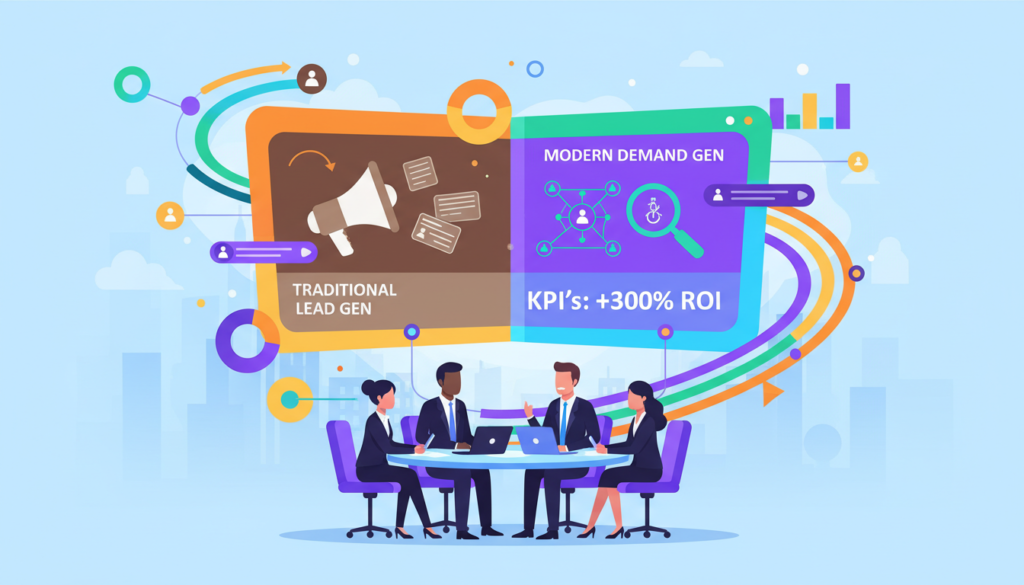
Modern buying behavior and limited sales time
Because buyers browse quietly, a single form fill rarely signals readiness. Forrester shows 82% of winners were viewed through at least five pieces of content before purchase. That means sales must wait for stronger cues.
Low-intent leads and pipeline hygiene
Optimizing for volume creates many low-intent names. These leads clog CRMs, lower rep efficiency, and produce false positives that distort conversion metrics.
Brand damage from premature outreach
Premature follow-ups after one asset download can annoy contacts and harm the brand. That bruises future outreach and reduces responsiveness from key accounts.
From assumed intent to real buying signals
Instead of routing every form fill, teams should wait for repeat pricing views, demo requests, competitor comparisons, or multi-persona engagement. These are the signals that justify a sales touch.
Multi-touch education to improve outcomes
A coordinated multi-channel program—search, social, events, video, and community—warms prospects so when they convert, the lead quality and downstream results are measurably better.
Learn why a signal-driven approach works and treat sales as a later-stage channel triggered by true buying intent, not as the default for every form fill.
Content and Gated Content: Good Practices for Building Trust and Capturing Leads
A smart content approach uses open articles to earn attention and gated assets to qualify serious interest. This balance lets a brand grow organic reach while collecting meaningful leads when buyers are ready.
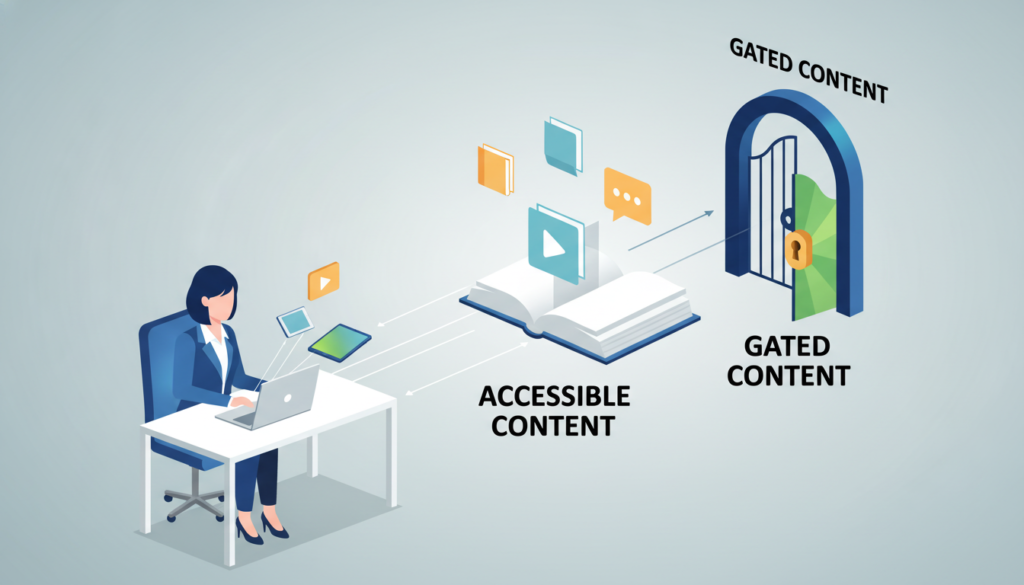
When ungated content wins for reach, SEO, and authority
Ungated content builds long-term visibility. It increases SEO value, attracts backlinks, and demonstrates expertise without asking for contact details too early.
What to gate and why
Gate only high-density assets where the value exchange is clear: original benchmark reports, ROI/TCO calculators, implementation architecture packs, and deep technical guides.
Frictionless conversion design
Keep forms short and ask only for essentials. Use progressive profiling to gather details over time and reduce friction for initial conversions.
- Pair an open summary page with a gated downloadable for depth.
- Follow up with a helpful recap and related resources; make sales contact optional.
- Use gated content to qualify interest, not to bulk up a database.
| Asset Type | Suggested Treatment | Primary Outcome |
|---|---|---|
| How-to blog | Ungated | SEO, reach |
| Benchmark report | Gated | Qualified leads |
| ROI calculator | Gated | High-intent signal |
Editorial note: Every blog and asset should offer a clear point of view, proof, and usefulness so the content earns attention rather than demanding it.
Inbound Demand Generation Strategy That Builds Brand Awareness Over Time
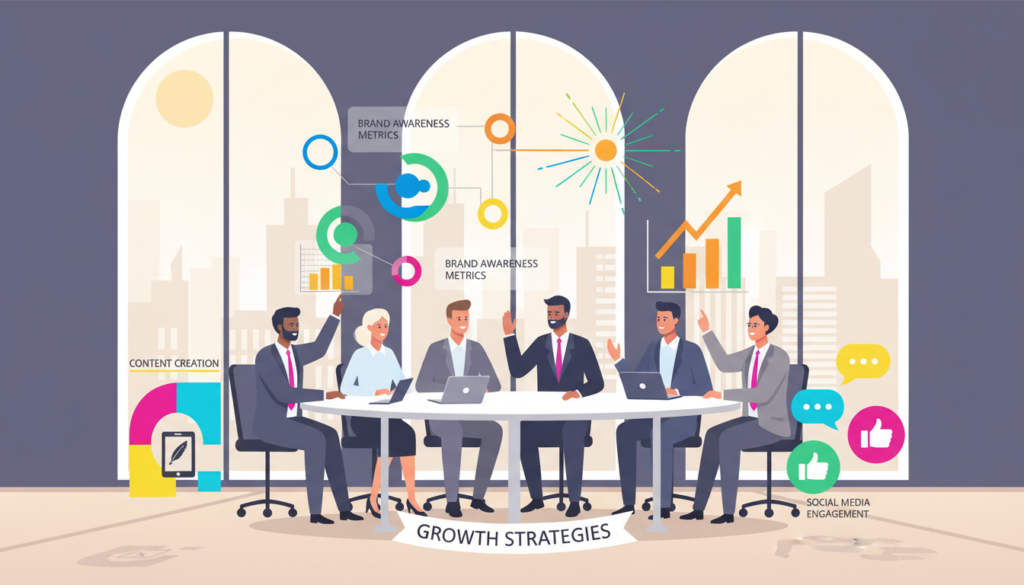
Inbound work compounds over months: consistent education programs make a brand familiar long before purchase windows open.
Top-of-funnel content that educates without selling
Content themes should focus on problem definitions, decision criteria, common mistakes, and guidance on how to think about solutions. This approach teaches and builds trust without a product pitch.
Social media and dark social that compounds reach
Social channels and private shares in Slack, WhatsApp, and niche forums push ideas into teams. Those peer conversations amplify reach beyond measurable clicks and help the brand enter conversations inside buying groups.
Webinars, live sessions, and repurposing workflows
Run expert-led webinars, then cut clips, post summaries, and seed email nurtures. Repurposing multiplies content value and keeps the audience engaged with less recurring cost.
Community-led growth and credibility
Notion is a clear example: creators and champions teach peers, creating trust that ads cannot buy. Operationally, executives and subject experts act as visible educators while marketing turns insights into repeatable assets.
| Channel | Format | Primary Outcome |
|---|---|---|
| Blog & SEO | How-to, frameworks | Long-term awareness |
| Social media & Dark social | Clips, discussions | Peer amplification |
| Webinars & Live | Expert sessions | Deep engagement |
| Community | Creator-led groups | Credibility & advocacy |
Inbound does not replace capture channels. Instead, it warms prospects so later outreach converts faster and pipeline efficiency improves.
Demand Capture Channels That Convert In-Market Buyers
Capture channels focus on buyers who are actively comparing options and need clear proof to pick a vendor. This phase values speed, clarity, and trust over broad reach. It makes it frictionless to choose a product and move toward purchase.
BOFU SEO pages buyers search for
High-intent SEO pages include pricing pages with FAQs, competitor comparison pages, integrations lists, and implementation or migration guides. These pages remove objections and show practical next steps for buyers and sales alike.
PPC for declared-intent queries
PPC should target queries like “pricing,” “best tool,” and “vs competitor.” Layer ads with remarketing and in-market audiences to raise conversion rates and lower wasted spend.
Email nurture and remarketing
Email sequences keep interest warm until a clear intent spike. Use timed cadences, helpful proof assets, and direct CTAs so the buyer moves to the right next step without friction.
Remarketing should reinforce value—not pressure—by serving case studies, ROI tools, and technical validation to reduce perceived risk.
Third-party validation and conversational qualification
Maintain strong review profiles on platforms like G2 and TrustRadius. Third-party validation appears in discovery and heavily influences selection.
Conversational chatbots and live chat outperform static forms for high-intent traffic. They answer questions, gather context, and qualify faster, improving handoffs to sales and increasing conversion rates.
| Channel | Primary role | Key asset |
|---|---|---|
| SEO (BOFU) | Remove objections | Pricing & implementation pages |
| PPC | Capture declared intent | Targeted ads + audiences |
| Email & Remarketing | Timing & reinforcement | Sequenced nurture, case studies |
| Reviews & Chat | Validation & fast qualify | G2 profiles, chatbots |
Partnering With Sales Using ABM and Buying-Group Orchestration
Aligning marketing and sales around target accounts turns scattered outreach into a cohesive buying experience. In complex B2B deals, the company-level purchase rarely hinges on a single contact. Teams must map who influences the decision and tailor proof for each role.
Mapping the buying group and tailoring messaging for each persona
Build a simple map: economic buyers, champions, influencers, technical evaluators, and procurement. Each persona needs different value props and evidence.
- Executives: executive POV and business impact.
- Engineers: technical architecture and integration guides.
- Procurement: risk reduction, SLAs, and pricing clarity.
ABM as the glue between marketing and sales motions
ABM makes both teams co-owners of outcomes. It aligns account lists, messaging plays, and timing so outreach is coordinated, not parallel.
When to trigger human outreach using dynamic signals
Use data-driven triggers: repeat pricing views, comparison searches, or multi-person engagement. Start sales outreach only when signals rise, after marketing has warmed the account.
| Signal | Action | Why it matters |
|---|---|---|
| Multi-person visits | Schedule coordinated outreach | Indicates broader interest |
| Pricing/comparison page views | Prioritize sales contact | Shows buying intent |
| Repeated technical content | Route to solution engineer | Needs deep proof |
Demand Generation Metrics and KPIs That Matter for Revenue Teams
The most actionable insights come from joining marketing data to opportunity motion and win outcomes. Start with a clear north star: lead quality and fit to the ideal customer profile (ICP). That focus prevents chasing volume that does not convert into revenue.
Lead quality and ICP fit
Lead quality is the north star. Score contacts by firmographics, intent signals, and multi-person engagement. Use ICP fit to prioritize outreach and measure downstream conversion to opportunities.
Pipeline contribution, velocity, and win rate by channel
Report pipeline created by channel and segment so teams see which motions produce qualified opportunities. Track pipeline velocity as a diagnostic: slow velocity usually signals missing proof or stage-specific content, not a volume problem.
Visitor-to-declared-intent rates and capture health
Measure visitor→declared-intent conversion on pricing, demo, trial, and comparison pages. These rates are the best health checks for the capture side of the funnel.
Cost measures and customer economics
Use cost per qualified action instead of cost per lead to tie spend to sales-ready outcomes. Segment CAC and LTV:CAC by channel and customer type to avoid scaling cheap leads that become low-value customers.
Preventing mis-scoring
Treat declared intent (demo, trial, pricing) as sales-ready and keep assumed intent (ebooks, webinars) in nurture. Adjust scoring with multi-person account data so outreach aligns with true buying signals.
| KPI | Definition | Where to measure | Action |
|---|---|---|---|
| Lead quality / ICP fit | Score combining firmographics and intent signals | CRM & MAP | Prioritize high-fit leads for sales outreach |
| Pipeline contribution | New opportunity value attributed to channel | Revenue reporting | Reallocate budget to high-conversion channels |
| Visitor→Declared-intent rate | Conversion on pricing/demo/trial pages | Web analytics | Improve capture pages and CTAs |
| Cost per qualified action / CAC | Spend per sales-ready event; CAC by segment | Finance & marketing dashboards | Stop scaling channels with poor LTV:CAC |
For teams, link operational tools to reporting — for example, adopt startup-friendly CRM solutions to keep data clean and make pipeline reporting reliable.
Conclusion
A healthy system earns attention early and only hands contacts to sales when signals prove readiness.
This guide shows demand generation as a durable, value-led approach that combines steady education with fast, low-friction capture. Teams should publish helpful content, amplify it through social and community, and back it with BOFU pages, PPC, email nurture, reviews, and chat.
Timing protects the brand: wait for real buying signals before outreach so prospects have context and trust. Operationalize a measurement cockpit — lead quality, pipeline contribution, velocity, win rate, and cost — to tie marketing to revenue.
Next step: audit capture pages and scoring for declared intent, then build a 90-day plan to strengthen both creation and capture. For a structured playbook, review a demand generation framework and consider an automated funnel to streamline handoffs.
FAQs
What is demand generation and how is it different from lead generation?
Demand generation is a long-term marketing strategy that builds awareness, trust, and interest among potential customers before they are ready to buy. Lead generation focuses on capturing contact details when intent is already declared. Demand gen warms prospects early, while lead generation converts ready buyers into sales opportunities.
Why is a demand generation strategy important for B2B marketing teams?
A demand generation strategy ensures that a company stays visible to its target audience throughout the buyer’s journey. In B2B marketing, where decisions involve multiple stakeholders and long research cycles, demand gen builds credibility early so conversions happen faster when prospects become in-market.
How does demand gen use data to improve marketing performance?
Demand gen relies on data such as content engagement, social media interactions, account activity, and declared-intent signals to guide timing, messaging, and channel selection. This data helps marketing teams prioritize high-fit prospects and focus sales outreach only when buying intent is real.
Which platforms and channels work best for demand generation?
Successful demand generation platforms combine content distribution, marketing automation, CRM, analytics, and attribution tools. Social media, SEO, communities, webinars, email nurture, and review platforms all play key roles in building awareness and converting qualified prospects.
How does demand generation help attract and convert potential customers?
Demand generation keeps a company top-of-mind by educating and guiding prospects through helpful content and social engagement. When potential customers are ready to act, optimized capture channels and data-driven workflows convert that interest into qualified leads and revenue-generating opportunities.