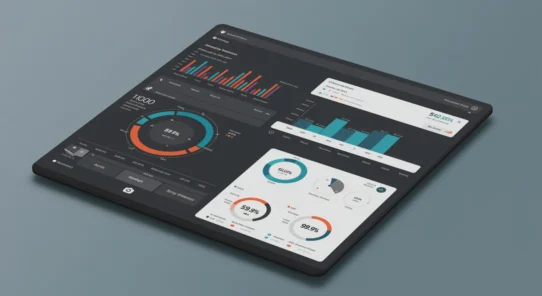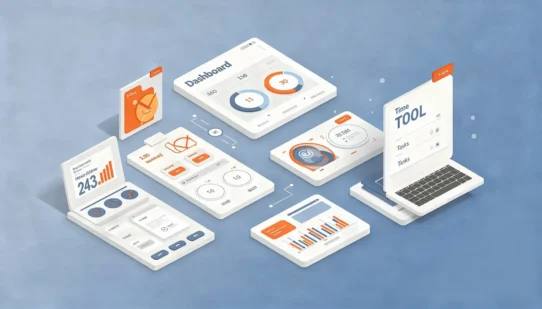




The rise of a unified digital workspace is changing how enterprises in India and beyond let employees work from anywhere. It frames a single console that centralizes apps, data, and endpoints so teams can collaborate without constant context switching.
The guide previews practical steps and clear definitions. It will cover platform components, the security model, rollout challenges, and how leaders measure success. Readers will learn how a unified approach reduces friction by bringing tools and information together.
This section sets expectations: the article balances employee experience with IT management so stakeholders align early. It also highlights how technology can boost flexibility and productivity while keeping governance and security intact.
Key Takeaways
- A unified digital workspace helps employees collaborate and reduces tool sprawl.
- Enterprises need clear measures for security, rollout, and adoption.
- Practical guidance covers what to include and what can go wrong.
- Balancing employee experience and IT control is essential for success.
- Expect steps on implementation, measurement, and scaling across the business.
What a Digital Workspace Is in Today’s Work Environment
A true unified environment brings applications, data, and endpoints together so work is seamless from any location. It is an operational setup that centralizes resources so employees can get what they need without hunting across systems.
How it simplifies delivery: a cloud-based console acts as a single front door. IT teams deploy and update applications, enforce policies, and govern access at scale. This reduces admin overhead and shrinks the number of manual steps users must take.
What “secure work anywhere” looks like
Secure work anywhere means protected data paths, controlled access, and consistent policy enforcement across endpoints. Data is protected whether it lives in a data center, public cloud, or on an endpoint.
- Centralization of applications and data for consistent access.
- One management console to deploy, update, and monitor resources.
- Device type and physical location matter less when policies and delivery are unified.
| Expectation | What to verify | Benefit |
|---|---|---|
| Centralization | Single catalog of applications and files | Faster access, fewer broken links |
| Secure access | Consistent policy enforcement and protected data paths | Lower risk of data loss |
| Consistent experience | Same user interface across laptop, tablet, or phone | Higher productivity and lower support costs |
| Cloud management | Console for deployment, updates, governance | Scale across distributed teams |
For more on platform features and vendor comparisons, see digital workspaces.
Digital Workspace vs Digital Workplace: What Businesses Mean by Each Term
Terms like workplace and workspace are often used interchangeably, but they set different expectations for users and IT.
How a fixed place and a flexible environment are used in practice
The phrase workplace usually denotes a fixed place — an office lobby, meeting rooms or assigned desks. It ties to physical design and on-site services.
By contrast, workspace describes a flexible environment where work happens anywhere: at home, on a commute, or in a satellite hub.
Why vendors use different labels for similar capabilities
Vendors often label overlapping features differently. Microsoft leans toward a workplace narrative that blends collaboration tools with office services.
Citrix and VMware emphasize the user-centric workspace idea focused on secure access and mobility.
- Focus on features: map vendor claims to capabilities, not names.
- Compare outcomes: secure access, collaboration, governance, and experience matter most.
- Practical check: verify wayfinding, signage, and room systems if the office experience matters.
| Term | Typical emphasis | Example | What buyers should check |
|---|---|---|---|
| Workplace | Place, office services, on-site experience | Lobby kiosks, room booking, digital signage | Office tech integration and facilities control |
| Workspace | Flexible access, user-centric tools, mobility | Remote app access, virtual desktops, single sign-on | Identity, secure access, device support |
| Overlap | Collaboration, content sharing, governance | Meeting systems, file sync, analytics | Map features to outcomes, not marketing names |
Decision lens: buyers in India should prioritize outcomes — secure access, collaboration, governance, and user experience — over label debates. For practical vendor evaluation, see how they help to streamline remote employee management.
Key Components and Tools That Power a Modern Digital Workspace Platform
Core components must interoperate so IT can scale management and users can stay productive. The modern platform bundles endpoint control, virtual delivery, secure content, identity, and analytics into a single operational set.

Unified endpoint management
Unified endpoint management (UEM) is the backbone for governing laptops, smartphones, tablets, and BYOD. It applies consistent policies, compliance checks, and patching so devices meet corporate standards.
Virtual desktops and app virtualization
VDI and app virtualization deliver consistent applications across any device. Teams no longer depend on local installs, which cuts support time and speeds onboarding.
Content collaboration and secure file sharing
Content services enable sharing and co-editing while preventing data leakage. Controls such as watermarking, file expiry, and endpoint policies keep corporate files safe.
Single sign-on and analytics
Single sign-on reduces repeated logins and centralizes identity control. Meanwhile, analytics and monitoring reveal adoption gaps, performance issues, and workflow bottlenecks.
- Examples: VMware Workspace ONE and Citrix Cloud show how platforms package delivery, management, and experience.
- Integration: these tools must act as an integrated system, not isolated apps, to lower friction and boost productivity.
| Component | Primary benefit | Why it matters |
|---|---|---|
| UEM | Device compliance | Consistent management across devices |
| VDI / Apps | Consistent access | Reduces local dependencies |
| Content & SSO | Secure sharing & access | Improves team collaboration and control |
For practical guidance on tooling and operations, see how to streamline remote employee management.
Benefits Businesses See After Digital Workspace Adoption
A consolidated access model helps firms reduce friction so employees can focus on outcomes rather than tools.
Flexibility that lets staff work from anywhere
Flexibility enables employees to work across locations and devices without breaking workflows. This supports hybrid teams and distributed operations.
Firms can hire broadly and recruit faster. Greater choice in where to work lifts satisfaction in tight talent markets.
Productivity gains and less context switching
Centralized tools cut repeated logins and reduce interruptions. Teams save time and finish tasks faster, improving overall productivity.
Faster collaboration and smoother communication
Real-time chat, quicker sharing, and unified file access speed decision cycles. Cross-functional teams move from draft to final in fewer steps.
Better employee experience and retention
Smoother access and clearer processes lower frustration. A stronger employee experience ties directly to lower turnover and reduced sick time.
Cost savings and improved customer service
Lower office footprint and less travel reduce overhead. Self-service help and analytics raise customer service quality with faster, consistent responses.

| Benefit | How it helps | Business outcome |
|---|---|---|
| Flexibility | Work across devices and locations | Broader hiring, higher satisfaction |
| Productivity | Fewer logins, less context switching | Faster delivery, lower time-to-value |
| Collaboration | Real-time sharing and communication | Quicker decisions, better cross-team work |
| Cost & Service | Smaller office costs; analytics for support | Lower spend; improved customer response |
Tip: benefits multiply when adoption is broad and governance is clear. For operational guidance on how to streamline remote employee management and services, see streamline remote employee management.
Security and Control in the Digital Workspace
Enterprises must design access paths that guard data whether it sits in the cloud, a data center, or on an endpoint. Security here means protecting information while keeping people productive and mobile.

Secure remote access models
Model choice depends on risk, user role, and where sensitive workloads run. Options include VPN gateways, secure web access proxies, and agent-based zero trust brokers.
Each model trades complexity for control. IT teams pick the approach that fits compliance and business needs.
Why security must scale
As employees use more applications and share files with partners, risk grows. Increased sharing and external collaboration demand stronger controls to stop data loss.
Identity and continuous authorization
Identity is the center of control. Single sign-on reduces password sprawl and centralizes policy enforcement for access to apps and systems.
Continuous authorization and Zero Trust checks validate users, devices, and sessions in real time. This reduces the window for attacks and limits lateral movement.
- Visibility: track users, endpoints, files, and traffic to spot anomalies quickly.
- Balance: design controls that protect the user experience to avoid shadow IT.
- Governance: apply centralized policies that scale across cloud and on-premises systems.
| Need | What to verify | Benefit |
|---|---|---|
| Access model | Risk profile, user roles, workload location | Right-sized protection |
| Identity | SSO, MFA, session checks | Lower credential risk |
| Visibility | Telemetry for users and devices | Faster incident response |
Common Challenges in Digital Workspace Rollouts
Rollouts often stumble not from technology but from how people receive and act on information. Notification sprawl is the first visible issue. Multiple tools send alerts into different channels. Employees then use email as a catch-all notification center.
This creates real productivity costs. Missed updates, duplicated work, and extra time triaging messages replace focused execution. Teams lose minutes that add up to hours across projects.
Training gaps deepen the problem. When staff lack clear onboarding and refresher programs, adoption slows. Powerful features sit unused and expensive services underdeliver.
Search limitations add risk. When knowledge and data are split across systems — for example, customer conversations in a CRM, onboarding in a learning platform, and files in multiple repositories — queries return incomplete results.
Integration complexity completes the list. Connecting legacy systems with SaaS apps often breaks governance and creates fragile links. That raises security overhead and lengthens rollout time.
Most of these challenges are solvable. With thoughtful governance, user enablement, and phased integration, leaders can restore productivity and improve adoption.
| Challenge | Effect | Practical fix |
|---|---|---|
| Notification sprawl | Lost time, missed tasks | Centralize alerts; set clear rules |
| Training gaps | Low adoption | Role-based learning and refreshers |
| Split knowledge & data | Poor decisions | Unified search and indexed connectors |
| Integration complexity | Governance risk | Phased API-first integration |
How to Implement a Successful Digital Workspace in an Enterprise
Start implementation by tying the initiative directly to measurable business outcomes and leadership priorities. This creates a clear mandate and helps secure budget and executive sponsorship.
Vision and strategy
Vision alignment clarifies why the platform matters and which KPIs it must move. Map how employees work across IT, HR, sales, support, and operations to spot where processes can be simplified.
Personas and compatibility
Define employee personas by role, mobility, collaboration intensity, and content needs. Then plan compatibility so any internet-connected device meets security and user experience standards.
Communication and governance
Provide a resilient communication layer for simultaneous voice, video, and data. Pair that with governance, enablement, and stakeholder management across business, HR, and IT for lasting adoption.
Rollout approach
Phased rollouts prove value quickly, reduce risk, and let teams iterate on feedback. Start small, measure, then scale when the platform meets expected outcomes.
| Phase | Focus | Key activity | Success metric |
|---|---|---|---|
| Pilot | Validation | Persona tests, network checks | Task completion rate |
| Expand | Adoption | Role-based enablement | Active user ratio |
| Scale | Governance | Policy roll-out, monitoring | Compliance incidents |
| Optimize | Improve | Telemetry-driven changes | Reduced support tickets |
For tactical guidance on aligning projects with business goals, see boost your SMB with transformation tips.
Measuring What’s Working and Improving Over Time
A steady measurement rhythm helps leaders spot friction and prioritize fixes fast. Treat measurement as a cycle: launch, measure, learn, and optimize. That mindset avoids one-off projects and keeps systems responsive to real work.
KPIs to track engagement, tool usage, and productivity
Track engagement (active users), tool use (feature adoption), and productivity signals such as task cycle times. Add employee experience feedback to capture sentiment and barriers.
Use analytics to surface which tools and features create value and which add friction. Correlate feature use with productivity gains to justify investments.
Using monitoring insights to reduce friction and strengthen governance
Monitoring uncovers performance issues that disrupt work and erode trust. It also highlights access failures and slow systems so teams can act quickly.
Link measurement to governance. Use insights to refine access controls, cut risky sharing, and standardize processes without slowing users down.
| KPI category | Metric | What it shows |
|---|---|---|
| Engagement | Active users / day | Adoption and habit formation |
| Tool use | Feature adoption rate | Which features deliver value |
| Productivity | Task cycle time | Workflow efficiency |
| Experience | Feedback scores | User satisfaction and pain points |
Establish a regular review cadence so management and business leaders act on data, not assumptions. Over time, analytics and monitoring together reduce friction, improve system health, and drive measurable productivity gains.
Conclusion
Bringing apps, data, and endpoints together creates a repeatable way teams get work done. A well-built digital workspace delivers consistent access across locations and devices while cutting friction and support costs.
The practical difference between a digital workplace and a workspace is less about labels and more about outcomes: secure access, smooth collaboration, and measurable value.
Core components to verify are UEM, virtualization, secure file sharing, SSO, and analytics. These form the platform foundation for policy, monitoring, and fast recovery.
When implemented with identity-led controls and protections that span cloud, data center, and device layers, firms gain flexibility, better collaboration, and a stronger employee experience without losing governance.
Rollout success rests on reducing notification overload, targeted training, unified search, and phased integration. Organisations that treat the environment as evolving—measured and optimized—realize the best returns for employees and customers.