

What if your company could achieve more with less effort? Many businesses struggle with outdated workflows that drain resources and slow growth. The solution lies in a strategic approach to refining operations.
Process optimization represents a systematic method for analyzing and enhancing business activities. It focuses on achieving maximum effectiveness while reducing waste. This approach helps organizations operate more efficiently and maintain high-quality standards.
Companies across India are discovering that process optimization serves as both an art and a science. Established best practices can be adapted to different business types while respecting each organization’s unique characteristics.
This systematic analysis of workflows identifies inefficiencies and implements improvements. The result is measurable business outcomes that drive competitive advantage. Organizations can reduce waste, allocate resources effectively, and focus on strategic initiatives.
Key Takeaways
- Process optimization systematically improves business operations for maximum efficiency
- It helps reduce waste and increase productivity across organizations
- Each business requires customized approaches while using established best practices
- Systematic workflow analysis identifies areas for improvement and measurable outcomes
- Optimized processes help maintain high-quality standards and meet customer expectations
- This approach enables better resource allocation and strategic focus
- Continuous improvement leads to sustained operational excellence
Understanding Process Optimization
The pursuit of operational excellence begins with understanding how work gets done. This foundation helps organizations build smarter workflows that deliver better results.
Defining Process Optimization and Its Role
Process optimization represents a systematic approach to improving business activities. It focuses specifically on continuous improvement within the broader field of business process management.
This specialized area helps companies analyze their current methods. Organizations can then implement changes that boost performance and outcomes.
Benefits for Businesses and Operational Efficiency
Companies gain substantial advantages from implementing these improvements. The most significant benefits include cost reduction and enhanced productivity.
By eliminating waste and bottlenecks, organizations operate more efficiently. This leads to better resource allocation and time savings.
Standardized workflows ensure consistent quality in products and services. Customers receive reliable experiences, which builds loyalty and satisfaction.
Businesses that excel at streamlining their operations gain competitive edges. They can differentiate themselves in crowded markets and attract new clients.
| Benefit Area | Primary Impact | Business Outcome | Customer Value |
|---|---|---|---|
| Cost Management | Reduced expenses | Higher profitability | Competitive pricing |
| Workflow Efficiency | Faster completion | Increased capacity | Quick service delivery |
| Quality Consistency | Standardized outputs | Reliable performance | Trust and satisfaction |
| Competitive Advantage | Market differentiation | Growth opportunities | Superior experience |
Many companies find that effective workflow management starts with understanding these core concepts. This knowledge prepares organizations for implementing specific improvement strategies.
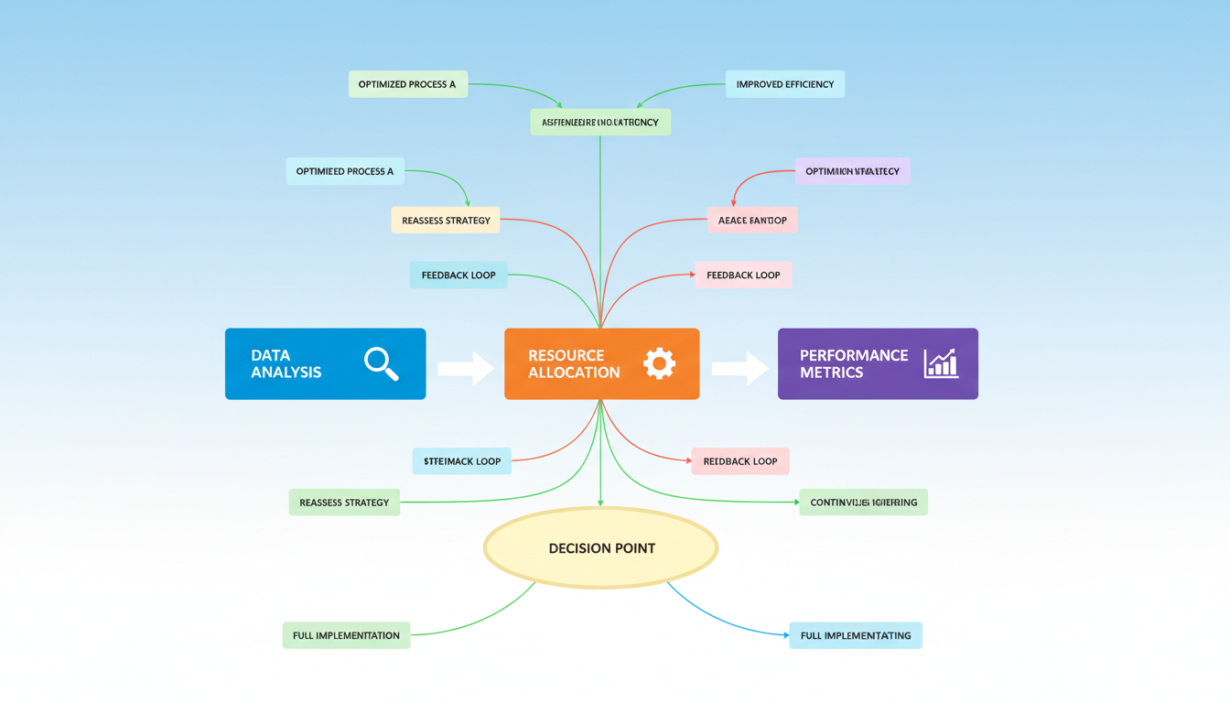
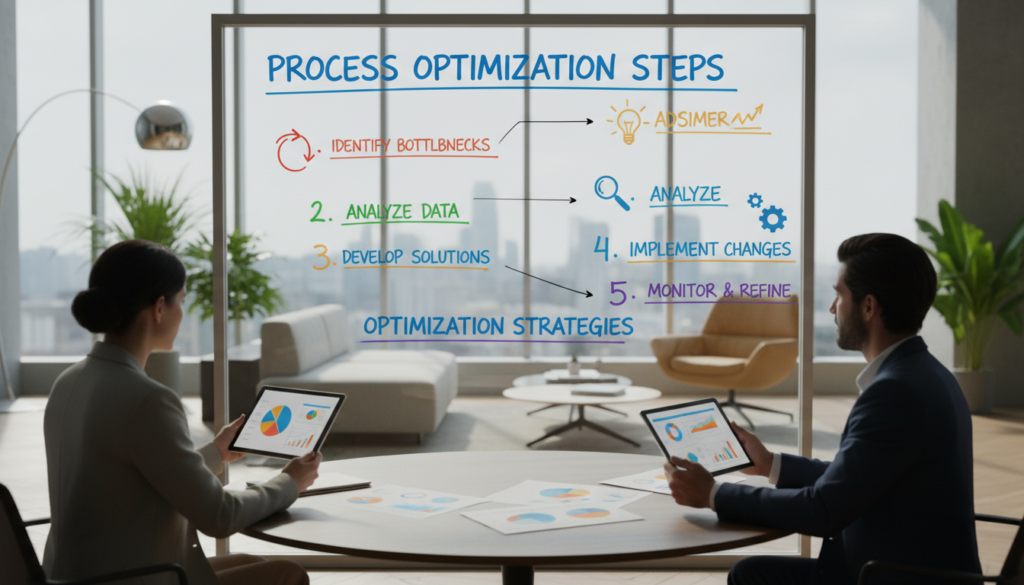
Key Steps for Optimizing Your Processes
Organizations seeking meaningful operational gains must follow a structured methodology. This systematic approach ensures sustainable improvements across business activities.
Setting Clear Goals and Objectives
The initial phase requires defining precise targets. Companies must establish what success looks like before beginning any changes.
Clear objectives guide all subsequent decisions. They help teams focus on the most impactful areas for enhancement.
Analyzing and Mapping Current Workflows
Thorough examination of existing procedures reveals improvement opportunities. Data analysis identifies bottlenecks and inefficiencies.
Visual mapping techniques provide clarity about workflow sequences. This understanding forms the foundation for effective redesign.
Implementing and Monitoring Improvements
Careful rollout of changes prevents operational disruption. Teams should test modifications before full implementation.
Ongoing measurement ensures desired outcomes are achieved. Regular evaluation supports continuous refinement of business activities.
| Implementation Phase | Primary Focus | Key Activities | Expected Outcome |
|---|---|---|---|
| Goal Establishment | Target Definition | Success criteria setting | Clear direction for changes |
| Current State Analysis | Workflow Examination | Bottleneck identification | Improvement opportunity mapping |
| Change Implementation | Controlled Rollout | Testing and monitoring | Sustainable performance gains |
| Ongoing Evaluation | Continuous Refinement | Performance measurement | Long-term operational excellence |
Mastering Process Optimization Techniques
The selection of appropriate methodologies separates average performers from industry leaders in business efficiency. Companies can choose from several proven frameworks to systematically enhance their operations.

PDCA Cycle, DMAIC, and Continuous Improvement
The PDCA cycle offers an iterative approach for systematic enhancement. This method follows Plan-Do-Check-Act stages to test changes before full implementation.
DMAIC provides a structured, data-driven framework with five distinct phases. Organizations use this method to address quality issues and inefficiencies systematically.
Both approaches support ongoing refinement of business activities. They help companies achieve sustainable performance gains over time.
Integrating Kaizen and Six Sigma Methodologies
Kaizen emphasizes small, incremental changes that accumulate into significant improvements. This philosophy involves all employees in the enhancement journey.
Six Sigma focuses on reducing errors through statistical analysis and standardization. It helps businesses achieve near-perfect outputs with minimal defects.
Complementary techniques like process mapping and root-cause analysis support these primary methods. Organizations can combine approaches based on their specific needs and industry context.
Effective Process Optimization Tools
Digital solutions are now essential for creating efficient business systems. Companies can choose from several powerful platforms that support improvement initiatives.

Robotic Process Automation (RPA) platforms handle repetitive tasks. Tools like UiPath and Blue Prism automate rule-based activities across departments.
This automation frees employees for more valuable work. It leads to significant time savings and cost reduction.
Robotic Process Automation and Business Process Management Platforms
Business Process Management (BPM) platforms offer comprehensive capabilities. Solutions like ProcessMaker and Kissflow help design and manage workflows.
These tools provide real-time visibility into operations. Companies can streamline complex cross-functional activities systematically.
Process Mining and Workflow Automation Solutions
Process mining software analyzes how work actually gets done. Celonis and Minit identify bottlenecks through data analysis.
Workflow automation tools create smooth end-to-end processes. They reduce manual intervention and accelerate completion times.
| Tool Category | Primary Function | Key Benefits | Example Platforms |
|---|---|---|---|
| RPA Software | Task Automation | Reduces manual work, increases speed | UiPath, Blue Prism |
| BPM Platforms | Process Design & Management | Standardizes workflows, provides visibility | ProcessMaker, Kissflow |
| Process Mining | Performance Analysis | Identifies inefficiencies, supports decisions | Celonis, Minit |
| Workflow Automation | End-to-End Streamlining | Accelerates completion, reduces errors | Nintex, Bizagi |
Selecting the right combination depends on specific business needs. Proper tool implementation ensures sustainable improvement.
Process optimization: Enhancing Efficiency and Reducing Costs
Companies seeking financial improvements must address both efficiency and spending. Systematic refinement of business activities delivers measurable benefits across operations. These enhancements create a competitive advantage in today’s market.
Cost reduction remains a primary goal for many organizations. Businesses achieve this by eliminating waste and using resources more effectively. This approach enables competitive pricing while maintaining quality standards.
Time represents a scarce resource that requires strategic allocation. Streamlined workflows generate maximum output from time investment. Automation options help eliminate unnecessary steps and accelerate completion.
Flexibility becomes crucial in rapidly changing business environments. Optimized processes with embedded automation allow quick adaptation to market shifts. Companies can respond without extensive employee retraining requirements.
| Optimization Goal | Primary Method | Business Impact | Customer Benefit |
|---|---|---|---|
| Cost Reduction | Waste elimination | Higher profitability | Competitive pricing |
| Time Efficiency | Workflow streamlining | Increased capacity | Faster service |
| Resource Management | Consumption control | Sustainable operations | Consistent quality |
| Error Prevention | Continuous improvement | Reliable performance | Trust building |
Intelligent resource use examines consumption patterns across materials and technology. Sustainable practices maintain profitability while limiting environmental impact. This approach supports long-term business viability.
The dual benefits of enhanced efficiency and reduced costs create a virtuous cycle. Improved processes deliver better customer value while generating savings. These savings can then fuel further operational enhancements.
Leveraging Automation and Data-Driven Insights
Modern businesses are discovering that automation and data analytics work together to create smarter workflows. This powerful combination transforms how companies approach operational enhancement.
Employing Automation Tools for Streamlined Workflows
Automation technologies handle repetitive, rule-based tasks efficiently. This frees employees for more creative work requiring human judgment.
Companies can identify automation opportunities by analyzing which activities follow predictable patterns. These tools adapt to changes without extensive employee retraining.
Utilizing Data Analysis to Inform Process Decisions
Data-driven approaches move businesses beyond assumptions. They base decisions on objective evidence about performance and resource utilization.
Process mining techniques accelerate data gathering for analysis. This helps identify bottlenecks and improvement areas precisely.
| Approach | Primary Function | Key Benefits | Implementation Focus |
|---|---|---|---|
| Automation | Task execution | Time savings, error reduction | Repetitive activities |
| Data Analysis | Performance insight | Informed decisions, waste reduction | Bottleneck identification |
| Combined Approach | Synergistic enhancement | Continuous improvement, measurable results | Strategic optimization |
The synergy between automation and data creates a cycle of continuous refinement. Automated systems generate performance data that informs further enhancements.
Overcoming Challenges in Process Optimization
Every business transformation journey encounters hurdles that test organizational resilience. Recognizing these obstacles early prepares companies for smoother implementation.
Successful enhancement requires anticipating common roadblocks. Proactive planning turns potential setbacks into manageable steps.
Addressing Resource Constraints and Cost Management
Limited resources present significant barriers to improvement initiatives. Companies often struggle with tight budgets and competing priorities.
Smart allocation becomes crucial when funds are constrained. Starting with smaller pilot projects demonstrates value before larger investments.
Effective cost management involves prioritizing high-impact areas. This approach maximizes returns while controlling expenses.
Managing Resistance to Change and Training Needs
Employee resistance often stems from uncertainty about new workflows. Clear communication about benefits reduces apprehension.
Comprehensive training programs ensure staff feel prepared for transitions. Proper instruction builds confidence in updated procedures.
Leadership commitment helps overcome organizational resistance. Dedicated champions maintain momentum during challenging phases.
| Common Challenge | Primary Impact | Effective Solution | Expected Outcome |
|---|---|---|---|
| Resource Limitations | Slowed implementation | Phased approach with pilot projects | Demonstrated value before full investment |
| Change Resistance | Employee pushback | Clear communication and involvement | Smoother adoption of new methods |
| Inadequate Training | Poor implementation | Comprehensive skill development | Confident workforce using improved processes |
| Unrealistic Expectations | Project disappointment | Measurable, incremental goals | Sustainable long-term improvement |
Businesses can navigate these challenges by setting realistic timelines and securing executive support. A thoughtful approach to digital transformation creates lasting positive results.
Integrating Continuous Improvement Strategies
The most successful companies treat enhancement as an ongoing journey rather than a destination. This mindset shift transforms how organizations approach operational excellence.
Regular Evaluation and Feedback for Long-Term Success
True process optimization requires embedding continuous improvement into daily operations. Organizations establish systematic evaluation cycles to monitor performance.
Dedicated teams oversee these enhancement efforts. They ensure refinement continues beyond initial project completion. Regular feedback from employees and customers provides valuable insights.
Each evaluation cycle identifies new opportunities. Companies then implement targeted improvements. This systematic approach delivers compounding benefits over time.
| Evaluation Approach | Frequency | Key Metrics | Business Impact |
|---|---|---|---|
| Quarterly Reviews | Every 3 months | Efficiency rates, cost savings | Identifies major bottlenecks |
| Monthly Check-ins | Monthly | Employee feedback, output quality | Addresses emerging issues quickly |
| Real-time Monitoring | Continuous | Process speed, error rates | Enables immediate adjustments |
| Annual Strategic Assessment | Yearly | Overall performance, goal alignment | Guides long-term direction |
This continuous refinement approach prevents complacency. Organizations maintain momentum even after achieving initial results. A thoughtful digital transformation strategy supports this ongoing enhancement process.
Building a culture of continuous improvement requires patience. Substantial transformation happens through sustained effort over extended periods. Each step forward creates a foundation for future enhancements.
Conclusion
Sustainable competitive advantage emerges when organizations embed improvement methodologies into their core operations. This systematic approach to refining business activities delivers measurable benefits across all functions.
Successful implementation requires clear goals and structured methods. Companies should combine proven techniques with modern tools for maximum impact. Business process management solutions provide essential support for documenting and automating workflows.
Organizations must view this as an ongoing commitment rather than a one-time project. Consistent application of best practices positions businesses to reduce costs and enhance quality. This creates superior value for customers while maintaining market leadership.
Companies that embrace these principles can automate their business using Zapier and other tools to build scalable, efficient systems. The journey toward operational excellence requires patience but delivers lasting rewards.