

What if the most significant changes in our world are driven by systems that work silently in the background? This question lies at the heart of understanding how modern society functions. The journey of mechanization and intelligent systems is a powerful story of progress.
This article explores the comprehensive journey from early mechanical innovations to the cutting-edge technologies transforming industries today. It provides a deep understanding of how these systems have become integral to modern life. The progression represents one of humanity’s most significant technological achievements.
It has reshaped how people work, manufacture goods, and interact with their environment. Readers will discover how progress moved from simple devices to sophisticated computer-controlled systems. These systems now define contemporary manufacturing, logistics, and daily routines.
Understanding this historical context helps make sense of current technological trends. It also allows us to anticipate future developments that will influence global economies. This guide examines the subject through multiple lenses for a holistic perspective on its transformative impact.
Key Takeaways
- Automation has progressed from basic mechanical aids to complex, intelligent systems.
- Its development has fundamentally changed work, production, and daily life.
- Historical context is key to understanding current and future technological trends.
- The impact is seen across manufacturing, logistics, and numerous other sectors.
- This transformation represents a major achievement in human history.
- Anticipating future developments requires a solid grasp of past innovations.
Understanding Automation and Its Impact on Modern Industries
Modern industries operate on a foundation of systems that function with remarkable independence. These technologies embed decision-making directly into machines. This approach transforms how work gets done across sectors.
Defining Automation in Today’s World
Automation describes technologies that reduce human intervention in processes. It predetermines decision criteria and actions within machines. This concept spans mechanical, hydraulic, and computer-based systems.
Contemporary solutions often combine multiple technological approaches. They create sophisticated systems operating with minimal oversight. The fundamental goal remains reducing manual tasks in manufacturing and other operations.
Benefits of Reduced Human Intervention
The advantages of automation are substantial and measurable. Companies achieve significant labor savings and reduced material costs. These systems also decrease electricity consumption and minimize waste.
Perhaps most importantly, automation delivers marked improvements in quality and precision. This consistency benefits manufacturing operations tremendously. Workers can then focus on higher-level tasks requiring creativity.
The table below illustrates key benefits across different industrial applications:
| Application Area | Primary Benefit | Secondary Benefit | Impact Level |
|---|---|---|---|
| Factory Processes | Labor Cost Reduction | Quality Improvement | High |
| Vehicle Systems | Precision Control | Safety Enhancement | Medium-High |
| Energy Management | Electricity Savings | Waste Reduction | Medium |
| Network Operations | Efficiency Gains | Reliability Improvement | High |
These systems employ closed-loop control mechanisms for optimal performance. They continuously adjust inputs to maintain desired set points. This ensures consistent results despite external disturbances.
Historical Foundations and Major Milestones of Automation
Ancient engineers discovered that natural forces could be harnessed to perform work that previously required human effort. This early history of automation reveals how people developed innovative ways to reduce manual labor.
The foundations of automated systems began with simple mechanical tools that transformed daily production methods.
From Water Wheels to Early Mills
Around the 1st century BC, Greeks and Romans pioneered water wheels for grinding grain. These early machines used falling water to drive mechanical processes.
Water-powered systems represented a fundamental shift in production. They demonstrated that natural resources could perform repetitive tasks.
Innovations in Wind and Water-Driven Systems
By the 9th century, Persians developed practical windmill designs. These tools operated in regions lacking flowing water resources.
Both watermills and windmills spread globally for diverse applications. They powered sawmills, paper mills, and ore-crushing operations.
Ctesibius of Alexandria created an early feedback mechanism around 270 BC. His water clock regulator showed the conceptual foundations of control systems.
| Ancient Technology | Primary Function | Century Developed | Key Innovation |
|---|---|---|---|
| Water Wheels | Grain Grinding | 1st Century BC | Water Power Use |
| Persian Windmills | Mechanical Processes | 9th Century | Wind Energy Use |
| Float Regulator | Timekeeping | 3rd Century BC | Feedback Control |
| Roman Mills | Flour Production | 1st Century BC | Industrial Scale Use |
These ancient machines established patterns that continued throughout subsequent technological development. They proved mechanical systems could reliably perform repetitive tasks.
The Industrial Revolution: From Steam Engines to Automated Factories
Factories transformed from simple workshops to complex production centers during this revolutionary period. Western Europe’s 17th century marked a turning point in industrial history. The shift from manual labor to machine-driven operations created unprecedented manufacturing capabilities.
Steam, Electric Power, and Process Improvements
James Watt’s 1765 steam engine invention provided reliable mechanical power. This technology replaced traditional watermills and windmills. Factories could now operate anywhere, not just near natural water sources.
Richard Arkwright’s 1771 water frame automated textile spinning completely. Oliver Evans followed in 1785 with the first fully automated flour mill. These machines demonstrated continuous production without human intervention.
The industrial revolution saw factories adopt steam power for mass production. Cotton, paper, and metals could be manufactured at unprecedented scales. This transformation created new manufacturing paradigms across industries.
James Clerk Maxwell’s 1867 work established theoretical foundations for control systems. His mathematical principles would later enable sophisticated industrial automation. These innovations set the stage for future technological advancements.
Emergence of Computer Control and Early Robotics
A new chapter in industrial history began with the integration of computer intelligence into mechanical processes. This period saw manufacturing facilities adopt digital solutions that transformed production capabilities.
The Introduction of Microprocessors
The 1971 invention of microprocessors dramatically reduced computer hardware costs. This breakthrough enabled rapid growth of digital control systems throughout manufacturing industries worldwide.
Digital computers provided controllers capable of performing complex tasks at unprecedented speeds. Manufacturing facilities gained efficiency levels far exceeding previous electromechanical control systems.
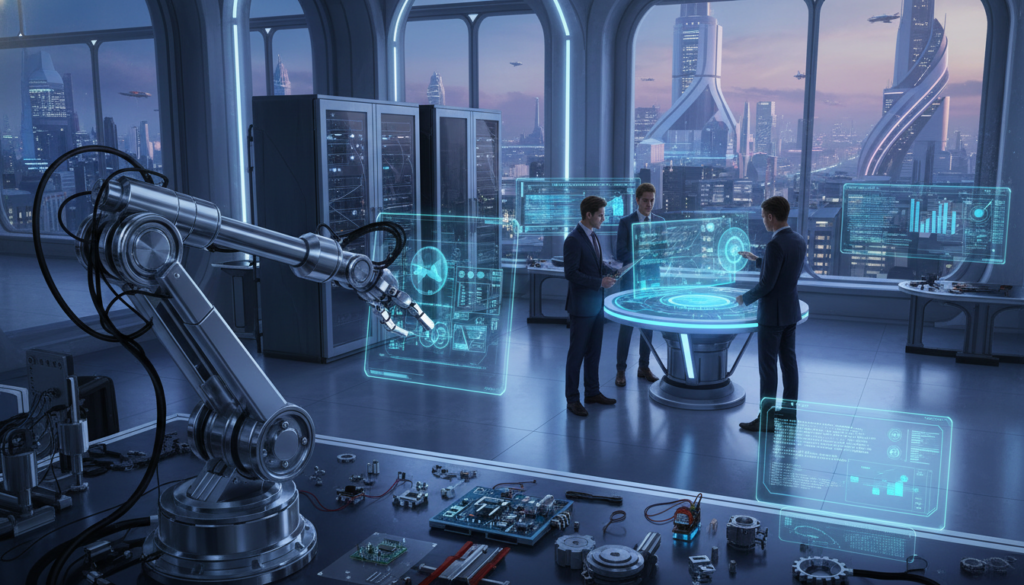
Early Robotic Systems and Articulated Arms
Victor Scheinman’s 1969 “Stanford arm” represented a robotics breakthrough. This 6-axis articulated all-electric robot demonstrated sophisticated movements and precise positioning capabilities.
General Motors installed the first industrial robot, Unimate, in 1961. This deployment heralded a new era where robotics became integral to manufacturing strategies.
European companies ABB Robotics and KUKA Robotics accelerated adoption in 1973. Their innovations established Europe as a major center for robotics technology development.
The convergence of computer technology and robotics created powerful synergies. Robots could now be programmed for diverse tasks and reprogrammed as manufacturing needs changed.
Key Developments in the evolution of automation
The mid-20th century marked a turning point in industrial technology when digital systems began replacing mechanical controls. This shift represented a fundamental change in how factories managed complex operations.
In 1958, solid-state digital logic modules emerged as predecessors to modern programmable logic controllers. These systems started replacing electro-mechanical relay logic in industrial control applications.
Milestones in Digital and Process Control
Texaco’s Port Arthur Refinery achieved a historic first in 1959. It became the initial chemical plant to implement digital control systems for process automation.
The 1970s witnessed rapid factory conversions to digital control. Falling computer hardware prices made these advanced technologies accessible to more facilities.
Earlier innovations laid crucial groundwork for this digital transformation. Controllers capable of calculated adjustments appeared in the 1930s, moving beyond simple on-off control.
Electronic amplifier development in the 1920s contributed significantly to control theory. Negative feedback noise cancellation from telephony applications found industrial uses.
These developments established the foundation for modern industrial automation. They enabled precise, reliable systems that manage complex manufacturing processes with minimal human intervention.
Advancements in Electromechanical and Digital Control Systems
The 1920s witnessed a fundamental shift in industrial operations as factories embraced electrical power and sophisticated control mechanisms. This period marked a critical advancement in how manufacturing facilities managed their processes and distributed energy throughout their operations.
Transition from Relay Logic to Digital Controllers
Factories experienced remarkable productivity gains during this electrification phase. Plants switching to electric motors saw approximately 30% increases in output compared to steam-powered facilities. Electric motors offered superior efficiency with less maintenance and eliminated friction losses from mechanical drives.
Early control systems relied on relay logic for basic operations. Control rooms used color-coded lighting to signal workers when manual interventions were needed. This approach represented simple “on-off” process control that required human response to each signal.
The shift to digital controllers marked a significant technological leap forward. Digital systems provided faster response times and greater reliability than hardwired relay-based automation. They could handle more complex control algorithms and offered easier reconfiguration capabilities.
These electromechanical advancements established the foundation for modern programmable logic controllers. Today’s distributed control systems manage complex manufacturing processes with minimal human intervention, building upon these early innovations in industrial control technology.
The Rise of Home Automation in the Modern Era
The quiet hum of a modern household now often signals the presence of integrated systems managing daily routines. This residential transformation began with early electrification, reaching approximately 70% of U.S. homes by 1930.
Electrical power distribution created new possibilities for domestic living. Homeowners gained access to labor-saving appliances that changed daily life fundamentally.
Evolution from Basic Appliances to Smart Homes
Early automated devices included water heaters, refrigerators, and washing machines. These innovations reduced manual household tasks significantly.
Initially, cost limited accessibility for most people. Improving technology and mass production eventually made these appliances affordable.
The 1970s saw electronics become more accessible due to falling computer hardware prices. This set the stage for sophisticated home systems.
Internet development during the 1990s-2000s revolutionized residential automation. Smart home systems became monitorable and controllable remotely.
Today’s technology integrates multiple functions into cohesive ecosystems. Residents manage their environments through smartphones and voice commands.
Impact on Daily Life and Energy Efficiency
Modern home automation delivers tangible benefits for convenience and resource management. Systems optimize heating, cooling, and lighting use automatically.
This approach enhances energy efficiency while maintaining comfort. Security systems provide continuous monitoring for peace of mind.
The table below shows key smart home features and their primary benefits:
| Smart Home Feature | Primary Benefit | Energy Impact | Convenience Level |
|---|---|---|---|
| Automatic Lighting | Electricity Savings | High | Medium |
| HVAC Controls | Temperature Optimization | High | High |
| Security Systems | Safety Enhancement | Low | High |
| Entertainment Controls | User Experience | Medium | High |
Home automation continues evolving toward greater integration. The impact on daily life represents a significant shift in how people interact with their living spaces.
Industry 4.0 and the Future of Automation
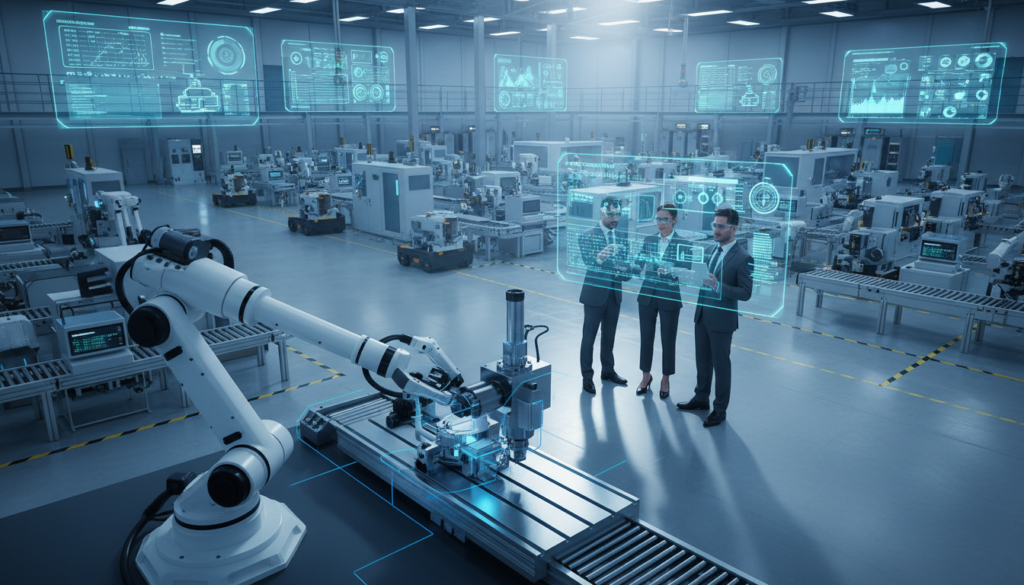
Smart manufacturing facilities represent the cutting edge of technological integration in production environments. Industry 4.0 describes the fourth industrial revolution where digital and physical systems merge. This approach creates highly responsive and efficient operations.
Integration of IoT, AI, and Big Data
The Internet of Things connects machines through networks of sensors. These devices collect real-time information from throughout manufacturing plants. This connectivity enables comprehensive visibility into operations.
Artificial intelligence analyzes the massive amounts of data generated. Machine learning algorithms identify patterns and optimize parameters automatically. This continuous improvement enhances both efficiency and product quality.
Big data analytics transforms raw information into actionable insights. Manufacturers gain deeper understanding of their processes and supply chains. Data-driven decisions become the foundation for competitive advantage.
The table below shows key Industry 4.0 technologies and their primary benefits:
| Technology | Primary Function | Manufacturing Impact | Data Usage |
|---|---|---|---|
| Internet of Things | Real-time Monitoring | Predictive Maintenance | Sensor Data Collection |
| Artificial Intelligence | Process Optimization | Quality Improvement | Pattern Recognition |
| Big Data Analytics | Decision Support | Strategic Planning | Insight Generation |
| Cloud Computing | Data Storage | Remote Access | Centralized Management |
These advanced systems are transforming industrial automation significantly. They create new opportunities while changing traditional manufacturing approaches. The impact extends throughout society as job roles evolve.
Robotic Process Automation: Innovation and Efficiency
Industrial robots now perform critical functions in production facilities, delivering consistent quality and operational efficiency. These systems handle complex assembly tasks with precision that surpasses human capabilities.
Enhancing Productivity in Manufacturing and Beyond
Robotic process automation transforms factory operations across multiple sectors. Industrial robots excel at repetitive tasks, ensuring uniform product quality. They operate continuously without fatigue or errors.
Manufacturing facilities benefit from increased productivity and reduced operational costs. Robots handle hazardous environments, protecting human workers from potential injuries. This approach maximizes safety while maintaining high production standards.
The technology extends beyond traditional manufacturing into service sectors. Software robots automate data entry and customer service functions. This expansion demonstrates the versatility of robotic process solutions.
Modern systems integrate artificial intelligence for adaptive performance. They learn from experience and optimize their own operations. This represents the cutting edge of process automation innovation.
| Industry Sector | Primary Robot Application | Key Benefit | Impact Level |
|---|---|---|---|
| Automotive Assembly | Welding and Painting | Precision Quality | High |
| Electronics Manufacturing | Component Placement | Micro-scale Accuracy | High |
| Food Processing | Packaging and Sorting | Hygiene Standards | Medium-High |
| Pharmaceuticals | Precision Dispensing | Consistent Dosage | High |
These advancements complement other digital transformations like AI chatbots for customer engagement. Together, they create comprehensive automation ecosystems. The future promises even greater integration across all business functions.
Integration of Energy Efficiency in Automation Systems
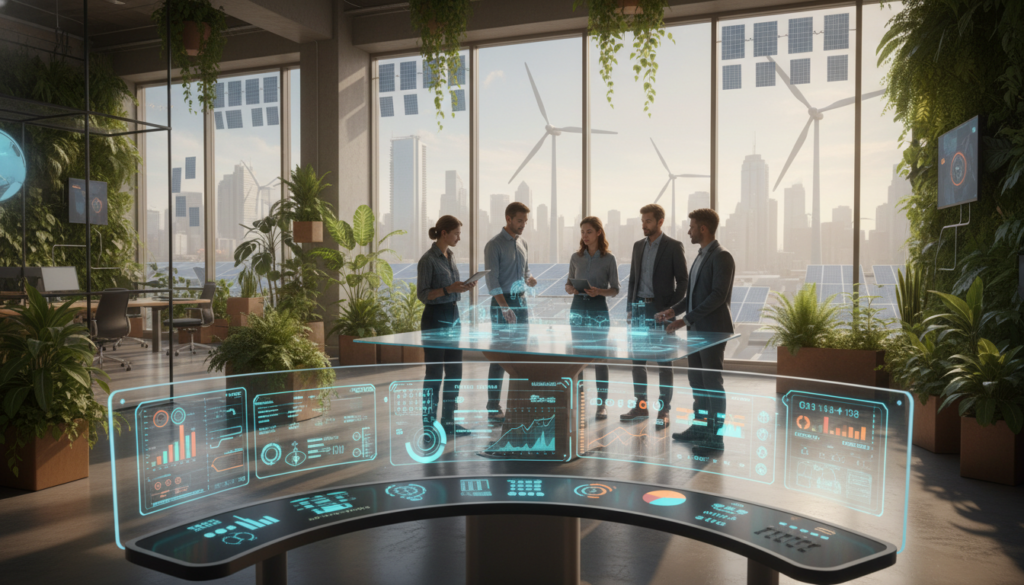
Continuous operation without interruption represents the ultimate goal for modern production systems. Manufacturers now prioritize technologies that enhance both performance and sustainability.
Continuous Energy Transfer and Minimizing Downtime
Downtime presents a massive financial challenge for industrial operations. Research shows manufacturing facilities lose approximately $260,000 hourly during shutdowns. Logistics centers face even higher costs reaching $1.3 million per hour.
Innovative energy transfer technology offers a solution. It provides continuous power to robots and automated equipment during motion. This eliminates charging stops and ensures 100% operational uptime.
Cost Efficiency and Sustainability Benefits
These advanced systems deliver substantial economic advantages. They reduce both capital and operational expenditures significantly. The technology requires minimal infrastructure changes while maximizing productivity.
Energy-efficient automation also supports environmental goals. It minimizes carbon footprints by optimizing power consumption. This approach aligns with corporate sustainability initiatives that improve efficiency across manufacturing processes.
Conclusion
Across multiple industrial revolutions, one constant has remained: the drive to enhance capabilities through technological advancement. This article has traced the remarkable journey from basic mechanical aids to sophisticated intelligent systems that define modern operations.
The impact on society has been profound. Industrial automation has transformed manufacturing processes while creating new opportunities for human workers. People now focus on complex tasks that require creativity and problem-solving skills.
Looking ahead, the principles of efficiency and quality continue to guide innovation. Future developments will build on current technologies like artificial intelligence and robotics. These advancements promise to further reshape how factories operate and how people interact with machines in daily life.
Understanding this progression provides essential context for anticipating what comes next. The ongoing integration of smart systems represents humanity’s continued pursuit of excellence in production and quality of life.